Skip to content
Sober Living Los Angeles
Buyer’s Guide · Recovery Housing

How to Choose a Sober Living Home

Choosing a sober living home comes down to a short list of essentials: certification, cost, rules, staff, safety, and fit. Compare homes on these, tour them, and watch for red flags.

Certified & Transparent Experienced Staff Safe & Structured
Touring a sober living home in Los Angeles before choosing it
David Beasley, Founder and Recovery Advocate at Sober Living Los Angeles
Reviewed byDavid BeasleyFounder & Recovery Advocate
Published Jun 17, 2026Updated Jun 17, 202613 min read

This guide is educational and is reviewed for real-world recovery accuracy. It is not a substitute for personalized medical or clinical advice. Confirm any home’s certification status and policies directly before deciding.

Choosing a sober living home comes down to verifying a short list of essentials: certification, cost and what it includes, house rules and accountability, the quality of staff and support, safety, and how well the home fits your specific recovery needs. The best way to choose a sober living home is to compare several on these criteria, tour them in person, ask direct questions, and watch for red flags before committing.

This guide walks through what to look for, how to check whether a sober living home is certified, what to ask about cost and rules, how to evaluate staff and safety, how to confirm the home fits your needs, the exact questions to ask on a tour, the red flags that should rule a home out, and how to make the final decision.

The Criteria

What Should You Look for in a Sober Living Home?

What you should look for in a sober living home is a combination of legitimacy, structure, support, and fit. A quality sober living home demonstrates all four, and evaluating each one in turn is how you separate a well-run home from a poorly managed one. The essential criteria to look for are:

  • Certification Certification by a recognized recovery-residence body and adherence to published standards.
  • Transparent cost A clear explanation of what the monthly fee includes, with no hidden charges.
  • Clear house rules A real accountability system, including regular drug testing and defined consequences.
  • Qualified staff An experienced house manager and structured peer support.
  • A safe facility A clean, well-maintained home in a recovery-friendly location.
  • Fit with your needs Gender, co-occurring mental health support, and medication policy that match your situation.

Each of these criteria is examined in detail below, beginning with the single most important sign of legitimacy: certification.

Checklist of criteria for choosing a quality sober living home
Certification

Is the Sober Living Home Licensed or Certified?

Certification is the first thing to verify, because a certified sober living home has agreed to meet published standards for safety, ethics, and operations. While sober living homes are generally not “licensed” the way clinical treatment centers are, the strongest homes are certified by a recognized recovery-residence organization.

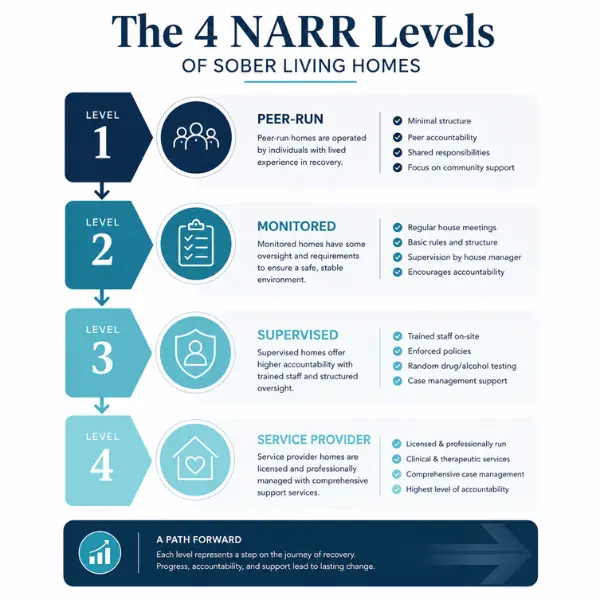
The national standard is set by the National Alliance for Recovery Residences (NARR), which publishes operating standards and a four-level classification for recovery residences. In California, NARR’s work is carried out by its state affiliate, the California Consortium of Addiction Programs and Professionals (CCAPP), which certifies recovery residences against those standards. Asking whether a sober living home is NARR- or CCAPP-certified, and asking to see proof, is the fastest way to confirm it operates legitimately.

Certification also signals accountability. The Substance Abuse and Mental Health Services Administration (SAMHSA) publishes recovery-housing best-practice guidelines, and certified homes commit to ethical standards, resident rights, and external oversight. A sober living home that submits to inspection and certification has nothing to hide; one that refuses should give you pause, a point the red-flags section returns to.

Cost

What Does the Sober Living Home Cost, and What Is Included?

The cost of a sober living home generally ranges from $500 to $2,500 per month, with homes in Los Angeles toward the higher end, and a key part of choosing well is understanding exactly what that fee includes. Two homes at the same price can offer very different value depending on what is bundled in.

Ask whether the monthly fee covers furnishings, utilities, internet, food or kitchen supplies, transportation, drug testing, and any programming such as recovery meetings or life-skills support. Ask about the move-in cost as well, including any deposit and the first month’s payment, and whether there is a refund policy if you leave early. A transparent sober living home will give you a written breakdown without hesitation; the full picture of pricing is covered in the guide to sober living cost in Los Angeles.

Be cautious of homes that will not state a price until you call and of homes that seem unusually cheap, since both can signal problems. Cost transparency is itself a quality signal: a home confident in its value will explain its pricing clearly, while vague or evasive answers about money often accompany vague or evasive management overall.

Rules

What Are the House Rules, and How Are Residents Held Accountable?

A quality sober living home has clear, written house rules and a real accountability system, because rules without enforcement do not protect sobriety. When choosing a sober living home, ask to see the rules in writing and ask specifically how they are enforced.

The core rules to confirm are mandatory sobriety, regular and random drug testing, a curfew, required attendance at recovery meetings, and participation in chores and house meetings. The presence of drug testing is especially important, because a sober living home that does not test cannot guarantee a substance-free environment for anyone living there. The complete picture of what to expect is described in the guide to sober living house rules.

Accountability is what makes the rules meaningful. Ask what happens when a rule is broken, how relapses are handled, and whether consequences are applied consistently. A well-run sober living home enforces its rules fairly and uses them to support recovery rather than to punish, which is a sign of competent, caring management.

Staff & Support

Who Runs the Home, and What Level of Support Is Provided?

Who runs a sober living home, and how much support residents receive, is one of the clearest differences between an excellent home and a mediocre one. When choosing a sober living home, find out who the house manager is, what their qualifications and recovery experience are, and how present they are day to day.

The level of support varies widely. Some homes provide only a part-time manager and basic oversight, while stronger homes offer an on-site house manager, structured peer accountability, and dedicated mentoring. Ask whether the home pairs new residents with a peer mentor or sponsor, how often residents meet with staff, and what happens if someone is struggling. A home with an active mentoring program provides daily, in-house guidance that goes well beyond basic supervision.

Staff quality also shapes the recovery community. A house manager with personal recovery experience and training in recovery support can recognize early warning signs, mediate conflicts, and model healthy sobriety. Asking about staff turnover and how long the current manager has been in place tells you whether the sober living home offers stable, consistent support.


Comparing Sober Living Homes?

Ask us anything about certification, cost, rules, and support, and arrange a tour. The right home should welcome every question.

Safety

Is the Sober Living Home Safe and Structured?

A sober living home should be visibly safe, clean, and well-maintained, because the physical environment directly affects recovery. When you tour a sober living home, evaluate the condition of the building, the safety of the neighborhood, and the overall atmosphere among residents.

Look for a clean, well-kept facility with adequate space, working appliances, and reasonable occupancy rather than overcrowded rooms. Check for basic safety provisions such as secure entry, smoke detectors, and private space for personal belongings. SAMHSA’s recovery-housing guidelines emphasize safe, healthy, and respectful living environments as a foundation of effective recovery housing, and a quality sober living home reflects that standard in its physical condition.

Structure is the other half of safety. Observe whether residents seem engaged and accountable or idle and disconnected, since the culture of a sober living home is as protective as its locks and smoke detectors. A safe, structured sober living home feels orderly and purposeful, with residents who follow the schedule and support one another, which is exactly the environment that protects early sobriety.

Personal Fit

Does the Sober Living Home Fit Your Specific Needs?

The right sober living home has to fit your specific recovery needs, not just meet general quality standards, because the same home can be excellent for one person and wrong for another. When choosing a sober living home, match its program to your situation.

Consider whether you need a gender-specific home, since many people recover better in a single-gender environment. Ask whether the home supports medication-assisted treatment (MAT), which is essential for many people in opioid recovery, since some homes still wrongly prohibit it. Ask whether the home accommodates co-occurring mental health conditions and coordinates with outpatient providers, and whether it involves families in the recovery process if that matters to you.

Location and lifestyle fit also count. Consider proximity to your work, school, outpatient treatment, and recovery meetings, as well as access to transportation. A sober living home that aligns with your gender, medical needs, mental health needs, and daily logistics removes the practical friction that can otherwise undermine a stay, making it far more likely you will complete the program.

Tour Questions

What Questions Should You Ask Before Moving In?

Before moving into a sober living home, ask a focused set of questions and, whenever possible, tour the home in person, because direct answers reveal far more than a website. A good sober living home welcomes questions and a visit; a reluctant one tells you something important.

The essential questions to ask are:

  1. Is the home NARR- or CCAPP-certified, and can I see proof?
  2. What is the total monthly cost, and what does it include?
  3. What are the house rules, and how are they enforced?
  4. How is drug testing handled, and how often?
  5. Who is the house manager, and what is their experience?
  6. What level of support and mentoring is provided?
  7. What is the average length of stay?
  8. Do you support MAT and co-occurring mental health care?
  9. How are relapses handled?
  10. Can I tour the home and speak with current residents?

Touring the home turns these answers into evidence. Arrange to tour our house or any home you are considering, observe the condition and atmosphere, and talk to residents about their experience. The willingness of a sober living home to answer plainly and open its doors is itself one of the best signs of quality.

Warning Signs

What Are the Red Flags to Avoid?

The biggest red flags in a sober living home are promises that sound too good to be true, missing rules or records, and a refusal to allow oversight. Any of these should rule a home out, because they signal management that is either incompetent or exploitative.

Specific red flags to avoid include:

  • A home that advertises itself as free or claims it will pay you to live there, which can indicate insurance fraud.
  • No drug testing or no sobriety requirement, which means the home cannot keep anyone sober.
  • No written house rules or no clear consequences, which signals poor management.
  • A rundown, unsafe, or overcrowded facility.
  • Untrained or uncertified staff, or a manager who is rarely present.
  • Refusal to submit to certification or inspection, or evasiveness about money.

A single serious red flag is enough to walk away. A sober living home is responsible for protecting your recovery during a vulnerable time, and one that cuts corners on safety, honesty, or accountability is not worth the risk no matter how convenient or inexpensive it appears.

Red flags to avoid when choosing a sober living home
Deciding

How Do You Make the Final Decision?

To make the final decision, weigh each sober living home against the same criteria, trust what you observed in person, and choose the home that combines legitimacy, support, and fit for your situation. After touring and asking questions, the right choice is usually the home that was transparent, well-managed, and aligned with your needs, not simply the cheapest or closest.

Compare your shortlisted homes side by side on certification, cost and value, rules and accountability, staff and support, safety, and personal fit. Give the most weight to the factors that protect early sobriety: a real accountability system, an experienced house manager, and a safe, structured environment. If two homes are close, the quality of the support and the feeling you had on the tour are reliable tiebreakers.

Finally, act on the decision promptly. Sobriety is time-sensitive, and the right sober living home protects the momentum of early recovery. Once you have found a certified, supportive, well-run sober living home that fits your needs, moving in without delay is the best next step for lasting recovery.

FAQ

Commonly Asked Questions

Is a sober living home licensed or certified?

Sober living homes are generally not licensed like clinical treatment centers, but the strongest homes are certified by a recognized recovery-residence organization. The national standard is the National Alliance for Recovery Residences (NARR); in California its affiliate is the California Consortium of Addiction Programs and Professionals (CCAPP). Ask for proof of certification.

What are the red flags when choosing a sober living home?

Major red flags include a home advertised as free or that claims it will pay you to live there, no drug testing or sobriety requirement, no written house rules, a rundown or overcrowded facility, untrained or uncertified staff, and refusal to submit to certification or inspection. A single serious red flag is enough to walk away.

What questions should I ask before choosing a sober living home?

Ask whether the home is NARR- or CCAPP-certified, the total monthly cost and what it includes, the house rules and how they are enforced, how drug testing is handled, who the house manager is, what mentoring and support is provided, the average length of stay, whether MAT and co-occurring care are supported, how relapses are handled, and whether you can tour and speak with residents.

David Beasley, Founder and Recovery Advocate at Sober Living Los Angeles
Reviewed By

David Beasley

Founder & Recovery Advocate, Sober Living Los Angeles

David is the founder and recovery advocate behind Sober Living Los Angeles. Drawing on lived experience and years of building structured, community-based sober living, he champions a holistic approach to recovery that pairs safe housing with mentorship and life coaching — rooted in the belief that everyone deserves a second chance. He reviews the recovery content published on this site for real-world accuracy and safety.

Read more about David Beasley

Is Sober Living Los Angeles the Right Fit?

We are a structured, supportive sober living home built on transparent pricing, experienced staff, an active mentoring program, and a safe recovery community. Contact us to ask questions and tour the home.