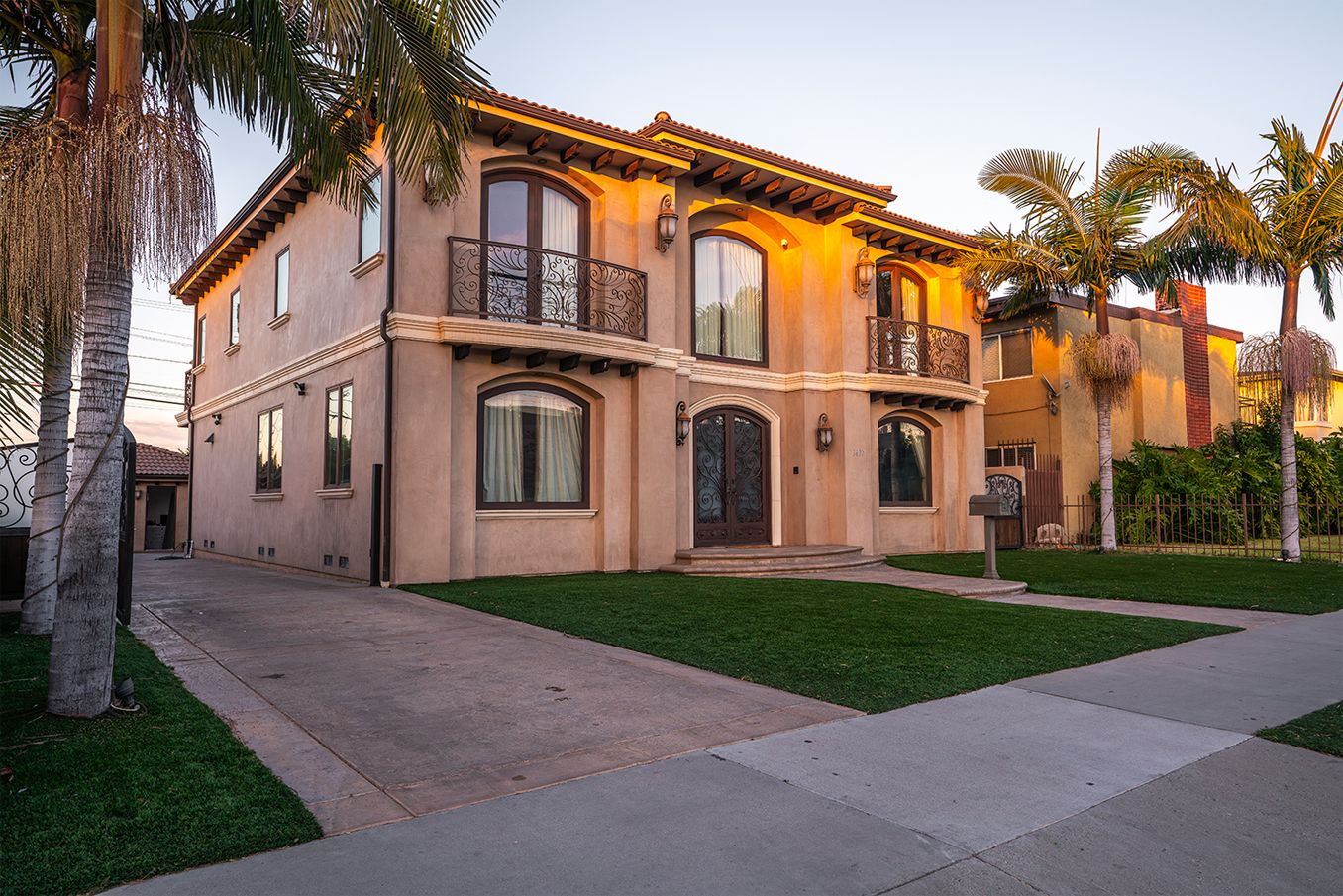

A sober living home provides a structured, substance-free residence where people in recovery from addiction rebuild independent lives with peer support, accountability, and access to recovery programming. For anyone leaving inpatient treatment or detox, a sober living home bridges the gap between clinical care and full independence, offering the stability and community that sustain long-term sobriety.
This guide explains what a sober living home is, how daily life in one works, what types of recovery residences exist, how sober living differs from a halfway house, who qualifies, whether residents can hold jobs, and how to determine if a sober living home is the right next step.
What Is a Sober Living Home?
A sober living home is an alcohol-free and drug-free residence where individuals in recovery from substance use disorder live together while developing the skills and stability needed for independent sober life, as defined by the Substance Abuse and Mental Health Services Administration (SAMHSA) in its “Recovery Housing: Best Practices and Suggested Guidelines” (2018). Industry synonyms include sober house, recovery residence, sober living house, and transitional recovery housing.
The purpose of a sober living home is to provide a supportive environment between clinical treatment and unsupervised living. Residents share household responsibilities, follow house rules, attend recovery meetings, and hold one another accountable for maintaining sobriety. Unlike clinical treatment facilities, sober living homes are peer-driven residential settings, not medical programs. They do not provide therapy, medication management, or licensed counseling on-site, though many residents attend outpatient treatment simultaneously.
The recovery housing model rests on three pillars: structure (daily routines, curfews, drug testing), community (shared living, peer mentoring, group meetings), and accountability (consequences for rule violations, regular check-ins with a house manager). Research published in the Journal of Substance Abuse Treatment by Dr. Douglas Polcin, Senior Scientist at the Alcohol Research Group, found that residents of sober living homes showed significant improvements in employment, arrest rates, and substance use at 6-month and 18-month follow-ups, regardless of whether they entered from treatment or from the community.
Sober living homes operate independently from government agencies. Most are privately owned and funded through resident rent payments rather than insurance reimbursement. This private-pay model keeps admission straightforward and avoids the clinical gatekeeping required by insurance-based programs, though it places the financial responsibility on residents and their families.
How Does a Sober Living Home Work?
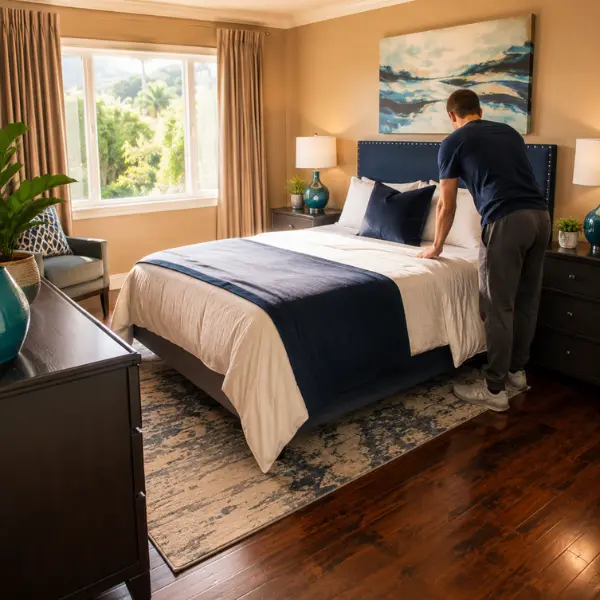
A sober living home works by combining shared housing with a structured daily routine that reinforces recovery habits. Residents typically pay monthly rent, follow a set of house rules, and participate in household operations alongside their housemates. The combination of personal responsibility and communal support creates a living environment where sobriety is both expected and reinforced.
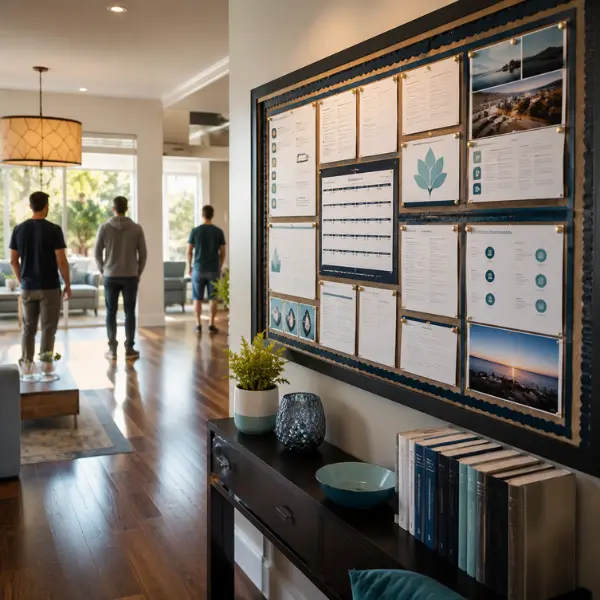
Daily life in a sober living home revolves around a predictable schedule. Most homes require residents to wake at a set time, complete morning chores, attend a recovery meeting or program activity during the day, maintain employment or volunteer work, and return home by curfew. Drug and alcohol testing occurs regularly, and results are shared with the house manager. This level of structure mirrors what residents experienced during inpatient treatment, but with greater personal freedom and self-direction.
A house manager or house mentor oversees daily operations. This person is typically a resident or staff member in long-term recovery who enforces house rules, mediates conflicts, coordinates chore schedules, and serves as a first point of contact for residents facing challenges.
According to Dave Sheridan, President of the National Alliance for Recovery Residences, the house manager role is the backbone of any well-run recovery home — providing both the consistency residents need and the accountability that keeps the community sober.
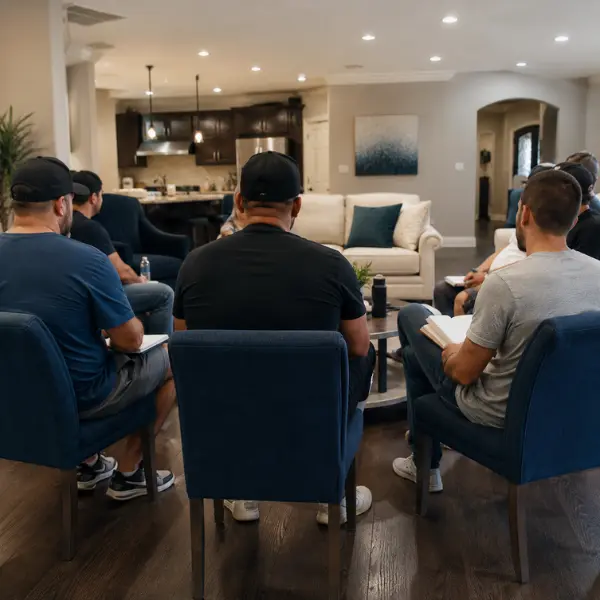
Peer support is the most distinctive feature of the sober living model. Residents attend meetings together, share meals, discuss challenges openly, and develop the interpersonal skills that addiction often erodes. This communal accountability, rather than clinical supervision, is what separates a sober living home from a treatment center. The strength of the peer community often determines how long residents stay and how well they transition to independent living.
Sober living house rules and the daily routine each deserve a full explanation, which the companion guides on sober living house rules and what a day in sober living looks like cover in detail.
What Are the Types of Sober Living Homes?
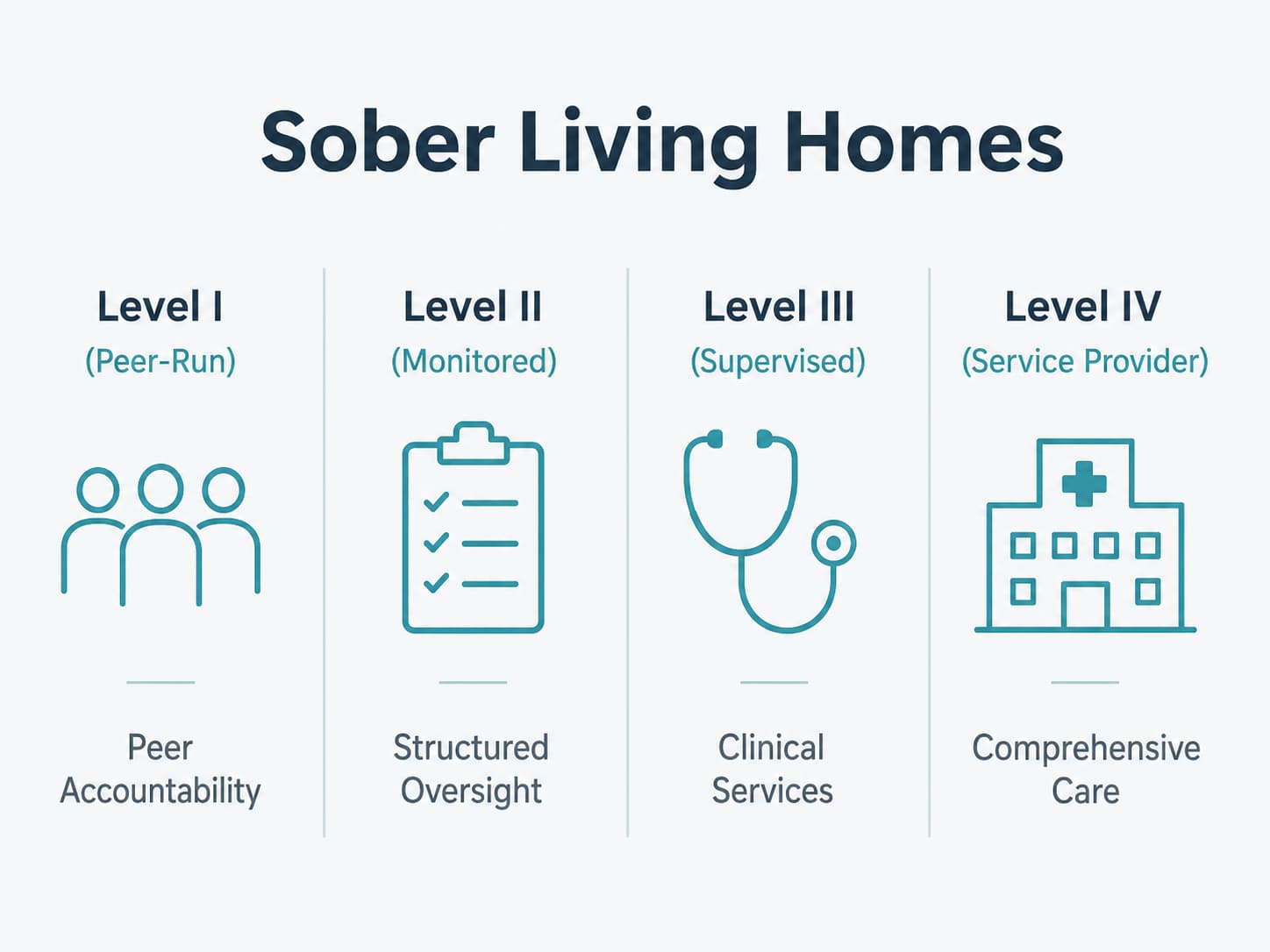
Types of sober living homes are classified into four levels by the National Alliance for Recovery Residences, the standard-setting body for recovery housing in the United States.
Level I: Peer-Run Homes
Provide the least structured environment. Residents govern the home democratically, with no paid staff on-site. Sobriety is required, but programming is minimal. These homes suit individuals with strong self-motivation and existing recovery networks.
Level II: Monitored Homes
The most common type and what most people mean when they say “sober living home.” A house manager monitors adherence to house rules, coordinates drug testing, and organizes house meetings. Most sober living homes in Los Angeles operate at this level.
Level III: Supervised Homes
Add professional staff oversight and structured programming, including life-skills training, employment assistance, and clinical referral coordination. Residents follow a more detailed daily schedule and may attend on-site programming.
Level IV: Service-Provider Homes
Offer the highest level of care within a residential setting, including licensed clinical services, case management, and sometimes medication management. These homes function closer to a residential treatment center.
The distinction among levels matters because it affects cost, independence, and the type of support available. A person leaving a 30-day inpatient program who needs a balance of structure and independence would typically enter a Level II or Level III sober living home. Someone with complex co-occurring mental health conditions might benefit from a Level IV setting. Understanding these levels helps residents and their families choose the recovery housing environment that matches their stage of recovery.
Sober living homes in Los Angeles span all four levels, with options available for those seeking structured recovery housing that combines community accountability with a supportive living environment.
How Is a Sober Living Home Different From a Halfway House?
A sober living home differs from a halfway house in funding, entry requirements, structure, and population served, though both provide substance-free housing for people in recovery. The table below compares the three main types of post-treatment housing:
| Dimension | Sober Living Home | Halfway House | Inpatient Rehab |
|---|---|---|---|
| Funding | Private-pay (resident rent) | State or federally funded | Insurance, private-pay, or grant-funded |
| Entry | Voluntary | Often court-ordered or mandated | Voluntary or intervention-driven |
| Duration | Flexible (months to years) | Time-limited (typically 6–12 months) | Fixed program (28–90 days typical) |
| Staff | House manager (peer, not clinical) | Staff-controlled (professional oversight) | Licensed clinicians, nurses, therapists |
| Clinical services | None on-site (outpatient referral) | Limited on-site or coordinated | Comprehensive (detox, therapy, medication) |
| Governance | Peer-led with house rules | Institutional rules with probation oversight | Clinical protocol-driven |
| Supervision level | Low to moderate (peer-led) | Moderate (staff-supervised) | High (24/7 clinical care) |
| Independence | High — residents manage their own schedules | Moderate — curfews and structured rules | Low — highly structured daily programming |
| Resident requirements | Sobriety and house rules; 12-step participation often required | Often court-mandated; legal involvement | Clinical assessment and approval for admission |
| Cost | $800–$2,500/month (LA market) | Often subsidized or free | $5,000–$30,000+/month |
The most important difference is the voluntary nature of a sober living home. Residents choose to live there because they want structure and community support for their recovery. Halfway house residents, by contrast, are frequently placed there as a condition of parole, probation, or court mandate. This distinction shapes the culture of the home: sober living homes tend to cultivate a sense of ownership and mutual investment, because every resident chose to be there.
An Oxford House represents a third model — a self-governing charter home with no paid staff, no time limits, and a democratic structure where residents vote on admissions and house decisions. Oxford Houses share the voluntary and peer-driven philosophy of sober living homes but operate under a national charter with standardized bylaws.
A more detailed comparison, including Oxford House distinctions and selection criteria, is available in the full sober living vs halfway house guide.
Who Is Sober Living For?
Sober living is for anyone committed to maintaining sobriety who needs a structured, substance-free environment to support their recovery. The most common residents fall into three groups, each arriving at a sober living home from a different starting point.
Completing Treatment or Detox
People who have achieved initial sobriety in a clinical setting and need a transitional environment to practice independent living before returning home. The transition from inpatient treatment straight to independent living without an intermediate step carries a higher relapse risk than stepping down through sober living, per findings published by the National Institute on Drug Abuse. How long to stay depends on individual progress, but research links longer stays with better outcomes.
Referred by Family or Providers
Individuals referred by family members, therapists, or treatment counselors. A parent researching options for a loved one finishing a 30-day program, or a counselor coordinating a discharge plan, will often identify a sober living home as the recommended next step. The referral process typically emphasizes homes that match specific recovery needs — program structure, location, and community environment.
Self-Referred in Early Recovery
People in early recovery who have not completed a formal treatment program but are committed to sobriety and willing to follow house rules. Some homes — particularly Level I and Level II residences — accept self-referred residents who demonstrate motivation and medical stability. Sobriety prerequisites vary: some require 14 or 30 days of documented sobriety before admission, others accept residents on the day they stop using.
Regardless of entry path, the common eligibility requirement is a genuine commitment to remaining sober. Every resident must agree to abstain from all substances, submit to drug and alcohol testing, and follow the home’s rules for the duration of their stay. Details on how to apply, what to bring, and what to expect during intake are covered in the how to get into sober living guide.