Getting into a sober living home involves understanding the eligibility requirements, gathering the right documents, completing the application and screening process, and preparing for your move-in day. For people leaving inpatient treatment, detox, or the community, the admission process is straightforward when you know what to expect at each stage.
This guide walks through who qualifies for a sober living home, what documents you need, the step-by-step admission process, how to find the right home, what to pack, whether prior rehab is required, and what your first day will look like.
How Do You Get into a Sober Living Home?
Getting into a sober living home starts with identifying a home that matches your needs and then completing that home’s admission process. Most sober living homes follow a similar intake sequence: initial contact, application, interview, drug screening, agreement signing, and move-in. The entire process typically takes between a few days and two weeks, depending on the home’s availability and the applicant’s readiness.
The most common referral paths into a sober living home are discharge planning from an inpatient treatment program, recommendation from a therapist or counselor, self-referral through the home’s website or phone line, and referral from a family member who has researched options on the resident’s behalf. Regardless of the referral source, every applicant goes through the same intake process. No path carries special priority over another; what matters is the applicant’s commitment to sobriety and willingness to follow the home’s rules.
Because sober living homes are privately operated, each home sets its own admission criteria. Some homes require 14 or 30 days of documented sobriety before entry. Others accept applicants who are sober on the day of application, provided they have completed medical detoxification and are medically stable. Understanding the specific home’s requirements before you apply saves time and prevents surprises during the intake process.
Who Qualifies for a Sober Living Home?
Qualification for a sober living home centers on three criteria: sobriety status, medical stability, and willingness to follow house rules. There is no universal standard that applies to every sober living home, but most homes require applicants to meet a baseline version of each criterion.
Sobriety status is the first qualification. Most sober living homes require applicants to be substance-free at the time of admission and to pass an initial drug and alcohol screening. Some homes require a minimum period of documented sobriety, typically 14 to 30 days, verified through a treatment provider or self-attestation. Homes that accept residents without a prior sobriety period still require that the applicant has completed medical detoxification and is not in active withdrawal.
Medical stability means that the applicant can function independently in a residential setting without needing medical supervision. Sober living homes do not provide nursing care, medication management, or emergency medical services on-site. Applicants who require ongoing medical monitoring, such as those with unstable co-occurring psychiatric conditions or active medical emergencies, are better served by a clinical treatment program until they are stabilized.
Willingness to follow house rules is the third and most important qualification in practice. Every applicant must agree in advance to abstain from all substances, submit to drug testing, observe curfews, attend recovery meetings, participate in household chores, pay rent on time, and comply with all other sober living house rules. This agreement is formalized in a residency contract signed before or on the day of move-in.
Additional criteria vary by home. Some sober living homes require applicants to have a referral from a treatment provider. Others give priority to applicants who have completed inpatient treatment within the past 30 days. Age restrictions, geographic preferences, and program-specific requirements, such as participation in a 12-step program, may also apply. The Substance Abuse and Mental Health Services Administration recommends that recovery housing providers publish their eligibility criteria clearly so applicants can self-screen before applying.
What Documents and Information Do You Need?
Applying to a sober living home requires a set of documents and personal information that the home uses to verify eligibility, assess fit, and complete the residency agreement. Gathering these items in advance speeds up the admission process.
The standard documentation includes:
- Government-issued photo identification Driver’s license, state ID, or passport.
- Proof of income or ability to pay rent Pay stubs, bank statements, benefits documentation, or a letter from a family member or sponsor confirming financial support.
- Treatment history or discharge summary From the most recent inpatient, outpatient, or detox program; not always required but strongly recommended.
- Sobriety verification Letter from a treatment provider, counselor, or sponsor attesting to the applicant’s sobriety status and dates.
- Medical records or medication list For residents taking prescribed medications, to verify that medications are current, prescribed, and managed by a licensed provider.
- Emergency contact information Name, phone number, and relationship of at least one emergency contact.
- Insurance information If applicable; most sober living homes do not bill insurance directly, but some coordinate with outpatient providers who do.
Some homes also request a personal statement or autobiography describing the applicant’s recovery journey, goals for sober living, and reasons for choosing that particular home. This is not a formal essay; a few paragraphs conveying genuine motivation and self-awareness are sufficient.
If you are applying while still in treatment, your discharge planner or case manager can help assemble these documents as part of the transition planning process.
What Is the Sober Living Admission Process?
The sober living admission process follows six steps from initial contact to move-in. While timelines and specific procedures vary from home to home, this sequence represents the standard intake pathway across the industry.
Research and Contact Homes
Identify two to three sober living homes that match your criteria for location, cost, program structure, and community environment. Contact each home by phone or through their website to confirm availability, ask about eligibility requirements, and request an application. Many homes offer a brief phone screening at this stage to determine basic fit before sending the formal application.
Complete the Application
Fill out the home’s application form with personal information, substance use and treatment history, employment status, financial information, and emergency contacts. Some applications are paper-based; others are submitted online. Complete the application honestly and thoroughly, as inconsistencies discovered later in the process can delay admission or result in denial.
Interview and Screening
The house manager or intake coordinator conducts an interview with the applicant, either in person or by phone. The interview assesses the applicant’s motivation for recovery, understanding of house rules, support network, and readiness for a structured living environment. This is also the applicant’s opportunity to ask questions about the home’s program, daily schedule, and community. The interview typically lasts 20 to 45 minutes.
Drug and Alcohol Testing
Most homes require a drug and alcohol screening before or on the day of admission. Testing methods include urine screening, breathalyzer, and occasionally saliva or hair testing. A positive result for any non-prescribed substance typically disqualifies the applicant until they can demonstrate a period of sobriety, usually 14 to 30 days.
Review and Sign the Residency Agreement
Once approved, the applicant reviews the home’s residency agreement, which details house rules, rent amount and due date, consequence structure, discharge policies, and expectations for program participation. Both the resident and the home operator sign the agreement. This document governs the entire residency and should be read carefully before signing.
Move In
On the scheduled move-in date, the resident arrives with personal belongings, completes any remaining paperwork, meets the house manager and housemates, receives a tour of the home, and begins orientation. Some homes assign a peer buddy or mentor to the new resident for the first week to help with the transition.

How to Find a Sober Living Home Near You
Finding a sober living home starts with identifying homes in your preferred location and then evaluating each one against your specific needs. For anyone seeking a sober living home in Los Angeles, the following resources are the most reliable starting points.
Treatment provider referrals are the most common way people find a sober living home. If you are currently in treatment or working with a therapist or counselor, ask your provider for recommendations. Treatment professionals maintain relationships with local sober living homes and can match you with a home that fits your clinical profile, insurance situation, and personal preferences.
Online directories maintained by NARR (the National Alliance for Recovery Residences) and state-level recovery housing organizations list certified homes with verified credentials. These directories allow filtering by location, gender, and level of care. SAMHSA’s behavioral health treatment locator also includes some recovery housing listings, though coverage varies by state.
Recovery community networks, including 12-step groups, alumni associations, and local recovery organizations, are another valuable source. Members who have lived in sober housing can provide firsthand accounts of specific homes, which is information that no directory can offer.
Once you have identified two or three candidates, evaluate each home using the criteria in the how to choose a sober living home guide: location, cost, program structure, rule enforcement, house manager quality, and community environment.
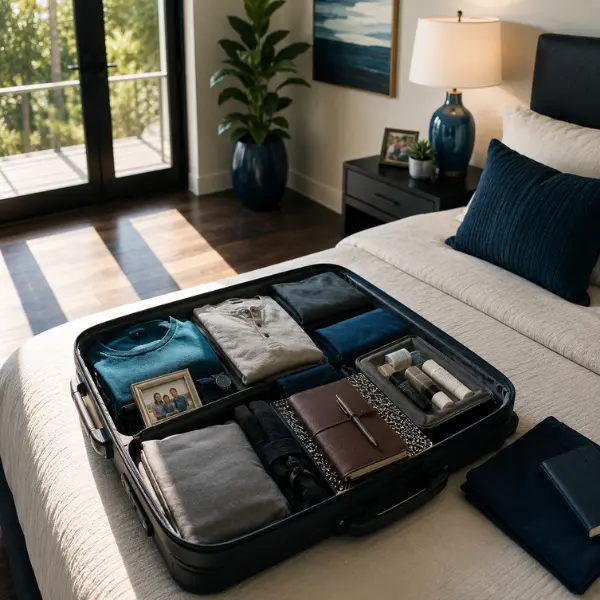
What to Bring to a Sober Living Home
Sober living homes provide furnished shared or semi-private rooms, communal living areas, and basic household supplies. Residents are responsible for bringing personal items. The following list covers what most residents need when moving into a sober living home.
Essential Items
- Clothing for at least one week (casual, workout, and one interview-appropriate outfit)
- Toiletries and personal hygiene products
- Bedding (some homes provide sheets and pillows; confirm before packing)
- Prescribed medications in original pharmacy containers
- Phone and charger
- Government ID, insurance cards, and important documents (stored securely)
- Cash or debit card for the first two weeks of personal expenses
Recommended Items
- Journal or notebook (many recovery programs incorporate reflective writing)
- Alarm clock (some homes restrict phone use in bedrooms)
- Small personal photos or items that support a positive mindset
- Recovery literature (Big Book, daily meditation books, or similar)
- Comfortable shoes for walking and exercise
Items Typically Prohibited
- Alcohol or any products containing alcohol (including mouthwash with alcohol, vanilla extract)
- Over-the-counter medications that can be misused (verify the home’s specific policy)
- Weapons of any kind
- Large amounts of cash
Check with the specific home before packing, as prohibited-item lists vary. Some homes restrict electronics, pets, or personal furniture. Arriving with the right items on move-in day reduces stress and allows you to focus on settling into your new community.