A 12-step program in a sober living home is a structured, peer-supported recovery method, based on the twelve steps first developed by Alcoholics Anonymous, that most sober living homes either require or strongly encourage residents to follow. In a sober living home, the 12-step program supplies the daily framework of meetings, step work, and sponsorship that turns a substance-free residence into an active recovery community.
This guide explains what a 12-step program is, what the twelve steps actually are, the different 12-step fellowships such as AA and NA, how the program works day to day in a sober living home, how it compares to non-12-step alternatives, whether attendance is mandatory, whether it is religious, how families can take part, and why the 12-step program is so central to sober living.
What Is a 12-Step Program?
A 12-step program is a peer-support recovery method built around twelve sequential principles, or steps, that guide a person from admitting powerlessness over a substance to maintaining sobriety and helping others do the same. The model originated with Alcoholics Anonymous (AA), founded in 1935, and was set out in the 1939 text commonly known as the Big Book, published by AA World Services.
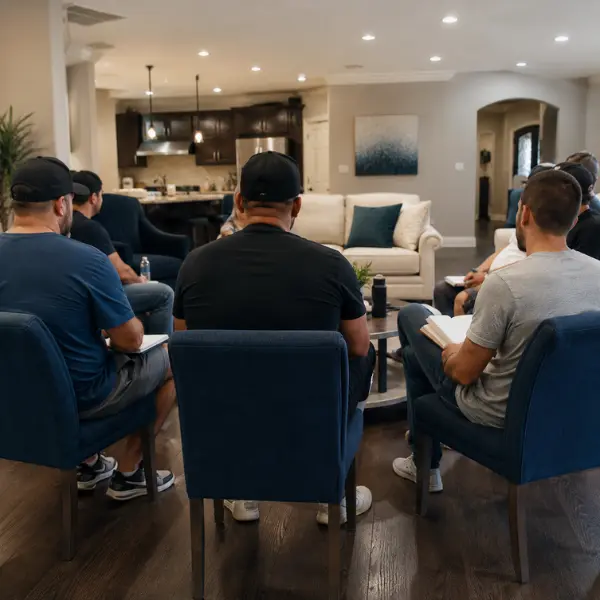
The core idea of a 12-step program is mutual aid: people in recovery support one another through shared experience, regular meetings, and a sponsor relationship in which someone with longer sobriety guides a newer member. In a sober living home, this peer-support model aligns naturally with the home’s own emphasis on community and accountability, which is why the two are so often paired.
A 12-step program is not clinical treatment, and a sober living home that uses it is not a treatment center. Rather, the 12-step program is a free, community-based recovery framework that residents participate in alongside the structure the sober living home provides. Understanding the twelve steps themselves makes clear how the program guides daily recovery.
What Are the 12 Steps?
The 12 steps are a sequence of principles that move a person through admission, self-examination, amends, and service. Each step builds on the one before, and members work through them at their own pace, usually with the guidance of a sponsor. The twelve steps, adapted from the language of Alcoholics Anonymous, are:
- Admitting powerlessness over the addiction.
- Believing that a greater power can help restore sanity.
- Deciding to turn one’s will over to that power, as personally understood.
- Making a searching, honest moral inventory of oneself.
- Admitting the nature of one’s wrongs to oneself and another person.
- Becoming ready to have these defects of character removed.
- Humbly asking for shortcomings to be removed.
- Listing people harmed and becoming willing to make amends.
- Making direct amends wherever possible, except when doing so would cause harm.
- Continuing to take personal inventory and admitting wrongs.
- Seeking to improve conscious contact with a higher power as understood.
- Carrying the message to others and practicing these principles in all affairs.
The phrase “higher power as personally understood” is central, because the steps deliberately leave that power undefined. In a sober living home, residents work the steps in a way that fits their own beliefs, and the home supports that process rather than prescribing a particular faith.

What Types of 12-Step Programs Are There?
The types of 12-step programs are organized as fellowships, each applying the same twelve steps to a specific substance or situation. While Alcoholics Anonymous is the original and best known, several fellowships extend the model so that every resident of a sober living home can find a meeting that matches their experience. The main 12-step fellowships include:
- Alcoholics Anonymous (AA) for alcohol addiction, the original fellowship.
- Narcotics Anonymous (NA) for drug addiction of any kind.
- Cocaine Anonymous (CA) for stimulant addiction.
- Marijuana Anonymous (MA) and Heroin Anonymous (HA) for specific substances.
- Al-Anon and Nar-Anon for the families and friends of people with addiction.
Each fellowship uses the same twelve steps and a similar meeting format, so a resident can move between them or attend more than one. In Los Angeles, the density of available meetings is unusually high, which means residents of a sober living home can find AA, NA, and specialized meetings at almost any hour. This wide access is one practical advantage of pursuing recovery in a sober living home in a large recovery community.